 Deutsch
 English

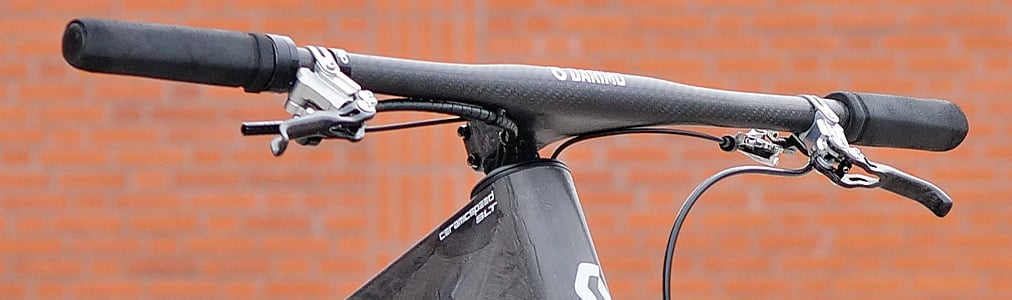
MTB Handlebar-Stem Units: Revolution for Performance and Design
Looking for the ultimate upgrade for your mountain bike? MTB handlebar-stem units combine innovative technology with functional design and offer an exciting alternative to conventional setups. This special carbon form connects the handlebar and stem in one continuous component – for maximum stiffness, reduced weight, and unique style on the trail.
want read more.
The advantages of integrated handlebar-stem units
The one-piece construction offers several decisive advantages over conventional systems:
Weight savings: By eliminating clamps and screws, you save valuable grams. High-end models often weigh 100-150 grams less than comparable separate components.
Higher stiffness: The continuous carbon construction eliminates weak points at connection joints and ensures more direct steering behavior and precise control.
Improved aerodynamics: The smooth, seamless surface reduces air resistance – particularly relevant for XC and marathon racers.
Damping properties: Through targeted carbon fiber alignment, manufacturers can optimize vibration damping and thus increase riding comfort.
Cleaner look: The minimalist design without visible clamping elements gives your bike a distinctive, modern look.
What you should consider when buying
When selecting an MTB handlebar-stem unit, there are some specific factors to consider:
Fixed geometry
Unlike separate components, you cannot make subsequent adjustments with integrated units. Therefore, pay particular attention to:
Stem length: Typical lengths range between 35 and 80 mm – shorter stems for downhill and enduro, longer ones for cross-country and marathon.
Rise: The height difference between stem clamp and handlebar position significantly influences your sitting position. Higher rise values (15-35 mm) provide a more upright posture, flatter ones (0-10 mm) result in a more stretched position.
Handlebar width: Since subsequent shortening is often not possible with carbon units, you must select the width (usually between 740-800 mm) precisely in advance.
Backsweep and upsweep: The angles at which the handlebar is bent backward or upward are predetermined and should match your preferred hand position.
Fork steerer compatibility
Be sure to check the diameter of your bike's fork steerer. Most units are designed for the 1 1/8" standard, but there are also models for tapered or 1.5" fork steerers.
Area of use
Depending on riding style, manufacturers offer different models:
- XC/Marathon: Lightweight constructions with flat rise and aerodynamic design
- Trail/All-Mountain: Balanced models with medium rise and optimized stiffness
- Enduro/Downhill: Robust variants with higher rise and maximum stability
Steering angle adjustment
Some premium models allow limited adjustment of the steering angle through interchangeable spacers or movable clamps. This flexibility can be valuable if you want to fine-tune your sitting position.
The proper installation – precise and safe
Mounting a handlebar-stem unit requires special care:
Mind the torque: Carbon reacts sensitively to overtightening. Strictly adhere to the manufacturer's specifications and always use a torque wrench.
Carbon assembly paste: This special paste increases friction between components and enables secure fixation with lower torque.
Regular inspection: Check your carbon unit regularly for fine cracks or damage, especially after crashes or hard rides.
Who benefits from a handlebar-stem unit
This special component is particularly interesting for:
- Weight-conscious bikers who count every gram
- Performance-oriented riders seeking maximum stiffness
- Design-minded mountain bikers who value a clean look
- Racers who want to benefit from aerodynamic advantages
An MTB handlebar-stem unit is an investment in performance, comfort, and style. It takes your bike to a new level – provided you choose the geometry to match your body type and riding style. With the right unit, you'll enjoy maximum control, optimal power transfer, and an incomparable riding experience on every trail.