












Mountain Bike Hubs: Technical Details for Lightweight & Stable Wheels
Lightweight or stability? When it comes to mountain bike hubs, the technology determines performance and durability. Here’s what you need to know when building your wheel—whether for fast trails or demanding terrain.
want read more.
Handpicked Products

- MSRP: 169,90 €
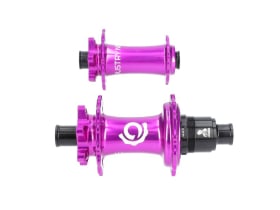
- MSRP: 737,80 €
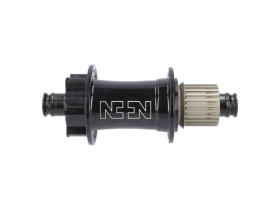
- MSRP: 500,00 €

- MSRP: 750,00 €
1. Spoke Count: Stability vs. Weight
The number of spokes directly affects the stiffness, weight, and load capacity of your wheel.
| Spoke Count | Application | Advantages | Disadvantages |
|---|---|---|---|
| 24 holes | Cross-Country (XC), Lightweight | Low weight, more aerodynamic | Less stable, for lighter riders |
| 28 holes | All-Mountain (AM), Trail | Balanced stability/weight ratio | – |
| 32 holes | Enduro, Downhill (DH), E-Bike | Maximum stability, high load capacity | Higher weight |
| 36 holes | Extreme Load (e.g., E-Bike, DH) | Highest stiffness and durability | Heaviest option |
Tip:
- Lightweight: 24 or 28 spokes are sufficient for XC and light trails—especially when combined with carbon rims and high-quality hubs (e.g., DT Swiss 240s).
- Stability: 32 or 36 spokes are a must for enduro, downhill, or e-bikes. Here, stiffness and fracture resistance matter more than every gram.
2. Axle Width: Compatibility & Stiffness
The axle width of the hub must match the frame and affects the wheel stiffness.
Front Hubs
| Standard | Application | Notes |
|---|---|---|
| 15x100 mm | Classic MTB (Non-Boost) | Older frames, less stiff |
| 15x110 mm | Boost (Modern MTBs) | Wider forks, more stiffness |
| 20x110 mm | Downhill, Freeride | Maximum stability for extreme loads |
Rear Hubs
| Standard | Application | Notes |
|---|---|---|
| 12x142 mm | Classic MTB (Non-Boost) | Standard for older frames |
| 12x148 mm | Boost (Modern MTBs) | Better chainline stability, wider tires possible |
| 12x157 mm | Super Boost (E-Bike, DH) | Extra stiffness for high torque (e.g., E-MTBs) |
Important:
- Boost (148 mm rear / 110 mm front) is now the standard for modern MTBs. It allows for wider tires and improves the chainline.
- Super Boost (157 mm rear) is used for E-MTBs and downhill bikes to handle the increased load from the motor and suspension travel.
- Attention: Always check frame and fork compatibility! The wrong axle width can cause issues with the chainline or brakes.
3. Material & Bearings: Durability and Rolling Resistance
-
Material:
- Aluminum: Lightweight, corrosion-resistant – standard for most hubs.
- Stainless Steel: Extremely durable but heavier (e.g., for downhill hubs).
-
Bearings:
- Industrial Bearings: Low-maintenance, durable – ideal for all-mountain and trail.
- Ball Bearings (Cup & Cone): Precisely adjustable but require more maintenance – for racing or custom builds.
4. Freehub Compatibility: Shimano, SRAM, Campagnolo
The freehub body must match your cassette:
- Shimano Microspline: For 12-speed cassettes (e.g., Shimano XT/XTR).
- SRAM XD/XDR: For 11- and 12-speed cassettes (e.g., SRAM Eagle).
- Campagnolo: Proprietary system, rare in the MTB sector.
Tip: Ensure compatibility with your drivetrain – the wrong freehub makes the hub unusable!
5. Brake System: Disc Mount
Modern MTB hubs are almost exclusively designed for disc brakes:
- 6-Bolt (IS): Standard for most brakes (e.g., Shimano, Magura).
- Centerlock: Lightweight system by Shimano, requires special rotors.
Attention: Check if your brake discs are compatible with the hub!
Conclusion: Which Hub Is Right for You?
| Goal | Spoke Count | Axle Width | Material | Freehub |
|---|---|---|---|---|
| Lightweight (XC) | 24–28 holes | 15x110 / 12x148 (Boost) | Aluminum | Shimano Microspline / SRAM XD |
| All-Mountain/Trail | 28–32 holes | 15x110 / 12x148 (Boost) | Aluminum | Shimano/SRAM |
| Enduro/Downhill | 32–36 holes | 20x110 / 12x157 (Super Boost) | Aluminum/Stainless Steel | Shimano/SRAM |
| E-Bike | 32–36 holes | 12x157 (Super Boost) | Stainless Steel | Shimano Microspline |
Your R2BIKE Tip:
Our expert advice will help you find the perfect hub for your project – with a compatibility check for frame, drivetrain, and brakes. Just ask us!