












Tubeless accessories: everything you need for a functioning tubeless bike
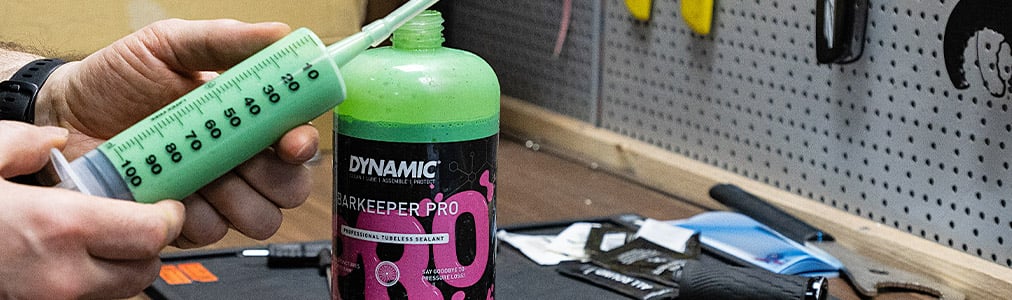
If you want to convert your bike to a modern tubeless system for maximum performance, you will need several components. Firstly, a sealant or sealant milk. This reliably seals small holes and cracks in tubeless bike tires - even while riding. Regardless of whether you are riding a road bike, mountain bike or gravel bike, tubeless milk ensures greater safety and significantly reduces the risk of punctures.
But for your tubeless setup to work perfectly, other essential components are needed in addition to the milk - such as tubeless rim tape and tubeless valves. Only a perfectly matched system guarantees tightness and ensures that you are permanently puncture-free on the road.
want read more.
What makes tubeless milk so important
Tubeless milk is essential for tubeless systems. Your converted wheels may already be holding air in the tire. However, you need a sealant so that you can cover long distances without any worries. The liquid sealant is distributed evenly inside the tire by the rotation of the tire and seals small punctures and cracks while riding - without the need for a tube.
The most important advantages at a glance:
- Puncture-free ride: Tubeless milk seals punctures at lightning speed so that you can continue riding without any problems. In the best case scenario, you won't even notice the puncture and won't need to stop to pump up
- Weight saving: By dispensing with a standard butyl tube, you save weight, which increases efficiency and speed
- Low maintenance: High-quality tubeless milk remains active for several months before it needs to be replaced. You can often refill with new milk directly without having to remove the remains of the old milk from the tires first
The importance of tubeless rim tape and tubeless valves
A perfect tubeless system is not just about the milk. Two other components - the tubeless rim tape and tubeless valves - are just as important to achieve a 100% airtight seal of the tires.
1. tubeless rim tape - the basis for a leak-proof system
The tubeless rim tape is an indispensable part of your tubeless system. It is used to seal your tubeless system in the other "direction". The spoke holes in the rim are sealed airtight with it.
What should you look for in tubeless rim tape?
- Width: Choose a rim tape that exactly matches the inner width of your rim (e.g. 21 mm, 25 mm, etc.)
- Material: High-quality tapes are tear-resistant and heat-resistant so that they remain reliable even under extreme conditions
- Proper installation: The rim tape should be applied cleanly and tightly over the entire rim, without folds or overlaps
Advantages of a good tubeless rim tape:
- Prevents loss of air pressure
- Protects against leaks through spoke holes
- Can be easily replaced if necessary
2. tubeless valves - the connection between tire and rim
Tubeless valves are another key element of your tubeless setup. They ensure that the air gets into the tire without any problems and remains safely in the system.
Which tubeless valves are the right choice?
- Valve length: The length of the valve must match the height of the rim. Longer valves (e.g. 60 mm or 80 mm) are required for high rims, which are often found on racing bikes
- Material: Most tubeless valves are made of aluminum or brass. Aluminum is light, while brass is particularly robust
- Replaceable valve core: With a removable valve core, you can fill the tubeless milk more easily or clean the valve
Advantages of high-quality tubeless valves:
- Easy filling of the milk directly through the valve
- Less air loss and long-lasting fit in the rim
- Suitable for all common rim systems
Tip: Use valves with a stable rubber base that adapts exactly to the shape of the rim to prevent leaks.
How does a complete tubeless setup work?
A successful tubeless system consists of the following steps and components:
- apply rim tape: Apply tubeless rim tape evenly and tightly over the entire rim to seal spoke holes
- install the tubeless valve: Insert the valve into the valve hole and tighten it with the valve ring so that there is no air loss
- mount the tire: Pull the tubeless tire onto the rim, be careful when mounting and avoid damage to the tire bead. This ensures a tight fit in the rim
- fill in tubeless milk (sealant): Fill the milk through the valve (with the valve core removed) or directly into the tire
- build up air pressure: Use a tubeless compressor or a special pump to inflate the tire with a powerful blast of air. This allows the tire bead to slide into its final position on the rim flange more quickly and keeps it tight
Alternatively, you can inflate the tire once as a test after fitting the tire (point 3). This allows you to check the secure fit of the tire. Defects or faults during the manufacture of the tire can also often be detected in this way and you can remove the tire without having to spend time cleaning the sealing milk that has already been filled in. If everything is in order, deflate the tire and remove the valve core, continue with point 4.
Conclusion: Complete tubeless system for maximum performance
The tubeless system offers you the perfect combination of safety, comfort and riding enjoyment - provided that all elements work together optimally. Tubeless milk ensures immediate sealing in the event of punctures, while the rim tape and valves create an essential basis for an airtight system.
When buying tubeless products, go for quality to benefit from the advantages in the long term. Equip your bike with rim tape, tubeless valves and high-quality tubeless milk now and enjoy the benefits of a tubeless system - puncture-free and efficient on any terrain!
What else to look out for?
Take enough time for the initial fitting or conversion to tubeless and take it easy. Nothing is more annoying than wanting to convert the system "quickly" before a ride and then being faced with either a defective tire or a mess with sealant and not having a bike that is ready for use.