
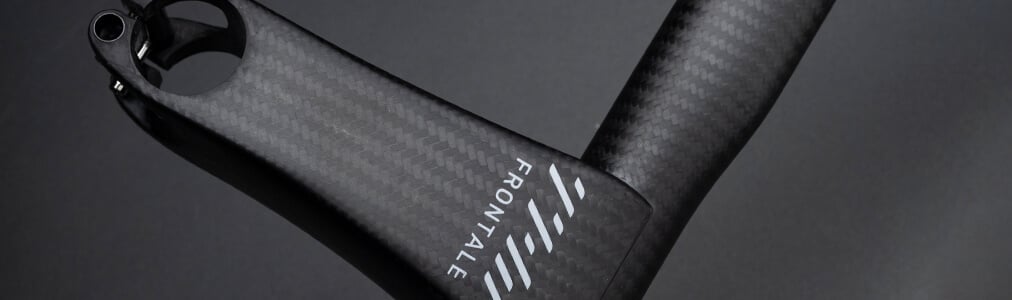
Road & Gravel Stem-Handlebar Units: Aerodynamics and Performance in One Piece
Looking for the decisive performance advantage for your road bike or gravel bike? Integrated stem-handlebar units combine innovative technology with uncompromising design and offer a cutting-edge alternative to conventional setups. These special carbon constructions connect handlebar and stem into one continuous component – for optimal aerodynamics, reduced weight, and a clean appearance on the road and off-road.
want read more.
The decisive advantages of integrated systems
The one-piece construction offers several significant advantages over traditional two-part systems:
Aerodynamic superiority: The seamless surface without clamping areas and exposed screws significantly minimizes air resistance – wind tunnel tests show savings of 5-8 watts at 40 km/h compared to conventional systems.
Weight reduction: By eliminating clamps and screws, the total weight is reduced. Premium models often weigh 80-120 grams less than comparable separate components.
Higher stiffness: The continuous carbon structure eliminates weak points at connection points and ensures more direct power transfer and more precise steering behavior.
Internal cable routing: Most units allow for completely internal cable routing – from the shifter through handlebar and stem directly into the frame, which not only provides aerodynamic benefits but also perfects the look.
Optimized vibration damping: Through targeted carbon layup, manufacturers can control the properties to dampen certain vibration frequencies – especially valuable when graveling on rough surfaces.
Aesthetic minimalism: The clean design without visible screws and clamping mechanisms gives your bike a professional, high-quality look.
What you should consider when buying
When selecting a stem-handlebar unit for road or gravel bikes, there are several crucial factors to consider:
Unchangeable geometry
Unlike separate components, the geometry of integrated systems is fixed. Therefore, pay particular attention to:
Stem length: Typical lengths range between 80 and 130 mm for road bikes and between 70 and 110 mm for gravel bikes. The length significantly influences your sitting position and handling.
Handlebar width: Since subsequent shortening is not possible with carbon units, the width (typically 38-46 cm for road bikes and 40-48 cm for gravel bikes) must be precisely selected in advance.
Reach and drop: These values determine the geometry of the handlebar and should match your riding style and body geometry.
Flare in gravel models: The characteristic angle at which the drop bar opens outward is particularly important for control in off-road terrain with gravel units.
Compatibility with your frame
Be sure to check:
Fork steerer compatibility: Most modern units are designed for 1 1/8" or tapered fork steerers.
Head tube length: This affects the number of spacers needed and the resulting position of the handlebar.
Cable routing system: Particularly important is compatibility with your frame's cable routing system. Many integrated systems route the cables completely through the handlebar, stem, and directly into the frame.
Differences between road and gravel units
Integrated systems for these two areas of use differ in important aspects:
Road bike units mainly focus on:
- Maximum aerodynamics with flat, streamlined profiles
- Stiffness for optimal power transfer
- Low weight for uphill performance
- Classic handlebar geometry with moderate drop and reach
Gravel units, on the other hand, offer:
- Pronounced flare in the drop bar area (10-25°) for control in off-road terrain
- Optimized vibration damping for more comfort on rough surfaces
- Slightly wider design for more stability
- Often more robust carbon structure for higher durability
Advantages and disadvantages in direct comparison
The advantages at a glance
- Aerodynamic superiority through seamless design and internal cable routing
- Weight savings compared to separate components
- Higher stiffness and more direct handling
- Clean look without visible screws and transitions
- Optimized damping properties thanks to specific carbon layup
- Perfect integration with modern frame concepts
The disadvantages to consider
- No adjustment options after purchase – the geometry is fixed
- Higher investment compared to separate components
- More complex replacement in case of damage or wear
- More elaborate installation of shift and brake cables
- Limited compatibility with older frames and forks
- More difficult transportability when traveling with the bike
Price ranges and quality differences
Integrated handlebar-stem units are available in various price segments:
Entry level (200-350 €): Basic models with adequate stiffness and internal cable routing options, often somewhat heavier.
Mid-range (350-500 €): Good balance of weight, aerodynamics, and stiffness from established brands.
Premium segment (>500 €): High-end models with minimized weight, maximum aerodynamics, and partially customizable adjustment options.
Optimal installation – precise and safe
The installation of an integrated unit requires special care:
Mind the torque: Carbon reacts sensitively to overtightening. Strictly adhere to the manufacturer's specifications and always use a torque wrench.
Plan cable routing: Especially with fully internal routing, you should carefully prepare the cables in advance and plan the installation – ideally with the help of internal routing guides.
Consider expert installation: Due to the complexity, it is often advisable to have the initial installation done by a professional bike shop.
Regular inspection: Check your carbon unit regularly for fine cracks or damage, especially after crashes.
Who benefits from an integrated unit
This special component is particularly interesting for:
- Performance-oriented road cyclists who want to exploit every aerodynamic potential
- Design-conscious cyclists who value a clean, professional look
- Technology-enthusiastic bikers who want to benefit from the latest developments
- Gravel enthusiasts seeking an optimal balance of control and comfort
An integrated stem-handlebar unit is an investment in performance, aesthetics, and handling – provided you are willing to forgo subsequent adjustment options. With the right model, you'll enjoy maximum aerodynamics, optimal power transfer, and an incomparable riding experience – whether on asphalt or gravel.