












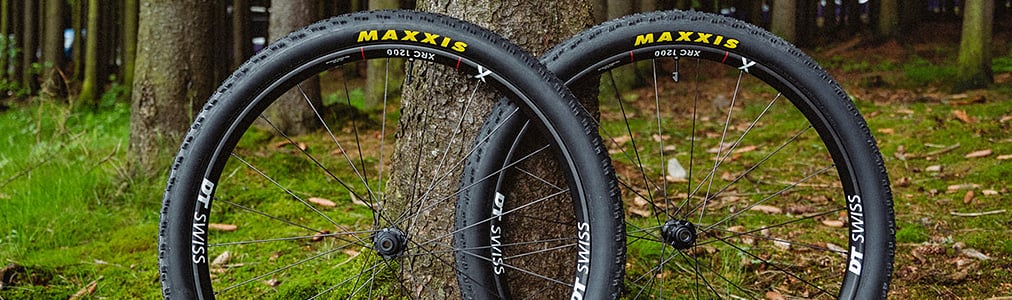
29er wheels & wheel sets for MTB – Your guide to XC, DC, DH and AM
Why 29er wheels boost your riding enjoyment
Need a new, perfect wheel set for your mountain bike? Whether you ride cross-country (XC), downcountry (DC), all-mountain (AM), downhill (DH) or enduro, 29-inch wheels are the perfect choice! Why? Because the large wheels give you a smoother ride, better traction and more speed over rough terrain. But be careful: not every wheel is suitable for every application or drive system. Here you can find out what you need to look out for to ensure that your new wheels are perfectly suited to your bike and riding style.
want read more.
1. Applications: Which Wheelset for Which Trail?
29er wheelsets are true all-rounders, but there are subtle differences depending on the discipline:
- XC (Cross-Country): Light, stiff and fast – every gram and every watt saved counts here. Carbon rims and light spokes are your friend.
- DC (Downcountry): Slightly more robust than XC, but still light. Ideal for technical trails with plenty of flow and the occasional drop.
- DH (Downhill): This is where things get serious! Wider rims (from 30 mm internal width), stable spokes and bombproof hubs are essential.
- AM (All-Mountain): The compromise between weight and stability. Perfect for everything between trail and enduro.
2. Materials: Carbon vs. Aluminium – What Suits You?
The choice of material affects weight, stiffness and price. Here are the facts:
Carbon
- Advantages: Extremely light, stiff, dampens vibrations
- Disadvantages: More expensive, more sensitive to lateral impacts
- Application: XC, DC, AM (for ambitious riders)
Aluminium
- Advantages: Cheaper, robust, easy to repair
- Disadvantages: Heavier, less dampening
- Application: DH, e-bike, budget option for AM/XC
Tip: If you ride a lot off-road and don't count every gram, aluminium is often the better choice. Carbon is worthwhile for racing or if you value maximum comfort.
3. Rims: Internal Width & Co. – Why the Details Matter
The internal width of your rim determines which tyre fits and how stable everything becomes:
- 25 mm: Ideal for narrow XC tyres (e.g. 2.0–2.3 inches).
- 25–35 mm: The sweet spot for trail/AM tyres (2.3–2.6 inches).
- >30 mm: DH and e-bike compatible – thick tyres (from 2.6 inches) also fit here.
Note: The wider the rim, the more stable the tyre – but also heavier!
4. Freehub Compatibility: Shimano vs. SRAM – Who Fits with Whom?
Nothing is more annoying than buying a wheelset that doesn't fit your cassette. The choice of the right freehub depends not only on the manufacturer, but also on the cassette generation and number of speeds. Here are the most important standards in detail – so you won't experience any nasty surprises.
Shimano Freehubs: HG vs. MicroSpline – The Crucial Difference
Shimano uses two main standards that are not compatible with each other:
Shimano HG (Hyperglide)
- Compatibility: 8-, 9-, 10- and 11-speed cassettes.
- Special feature: The classic standard for older and mid-range groupsets (e.g. Deore, SLX, XT up to M8000).
- Note: Not compatible with 12-speed cassettes from Shimano!
- SRAM compatibility: Works with SRAM cassettes up to 11-speed (e.g. PG-1130, PG-1170), but not with 12-speed SRAM XD cassettes.
Shimano MicroSpline
- Compatibility: Exclusively 12-speed cassettes (from 2019, e.g. XT M8100, XTR M9100, Deore M6100).
- Special feature: Narrower tooth spacing for more precise shifting, but not backwards compatible with HG freehubs.
- SRAM compatibility: Not compatible with SRAM XD cassettes! MicroSpline is a pure Shimano standard.
Important for upgrading: Anyone switching from 11-speed to 12-speed Shimano must use a MicroSpline freehub. An HG freehub is not sufficient here!
SRAM Freehubs: XD and XDR – For 11- and 12-Speed Drivetrains
SRAM uses its own freehub standards, which are divided into two variants:
SRAM XD
- Compatibility: 11- and 12-speed SRAM cassettes (e.g. GX Eagle, X01 Eagle, XX1 Eagle).
- Special feature: Enables the small 10-tooth cog (for more range), but not compatible with Shimano cassettes.
- Shimano compatibility: No – XD is purely for SRAM cassettes.
SRAM XDR
- Compatibility: 12-speed road/gravel cassettes (e.g. SRAM Red eTap AXS, Force AXS).
- Special feature: Similar to XD, but optimised for narrower cassettes (10–36 teeth).
- MTB relevance: Hardly any – XDR is primarily intended for road/gravel.
Note: SRAM XD freehubs are not compatible with Shimano cassettes – not even with MicroSpline!
5. Axle Standards: Thru-Axles Are Essential – But Which Ones?
Quick release? Forget it! Modern MTB wheelsets use thru-axles for more stiffness and safety. The most common standards:
- Boost (110 mm front / 148 mm rear): The quasi-standard for modern MTBs. More stiffness, wider hub flanges.
- Super Boost (157 mm rear): For DH and e-bikes – even more stable, but less common.
- Non-Boost (100 mm front / 142 mm rear): Older bikes or XC race machines.
Important: Check which standard your frame supports before buying!
6. Spokes: Round, Flat or Aerodynamic?
There are differences here too:
- Round spokes: Classic, affordable, easy to replace.
- Flat spokes (e.g. DT Swiss Aerolite): Lighter and more aerodynamic, but more expensive.
- Double butted: Extra stable for DH or e-bike.
Rule: The more demanding the application, the more stable the spokes should be.
Conclusion: Your Perfect 29er Wheelset – How to Find It
In summary: Think about where and how you ride, then choose material, rim width and freehub accordingly. Pay attention to your frame's axle standards and use thru-axles for maximum performance.
Do you need help choosing or want a custom build? Take a look at our range or ask us directly – we'll help you find the optimal setup! You can plan your build with us via [email protected].
PS: Don't forget to regularly check your new wheelsets for spoke tension and trueness. A well-maintained wheelset lasts longer and is more fun!