

SCOTT Scale RC Aero
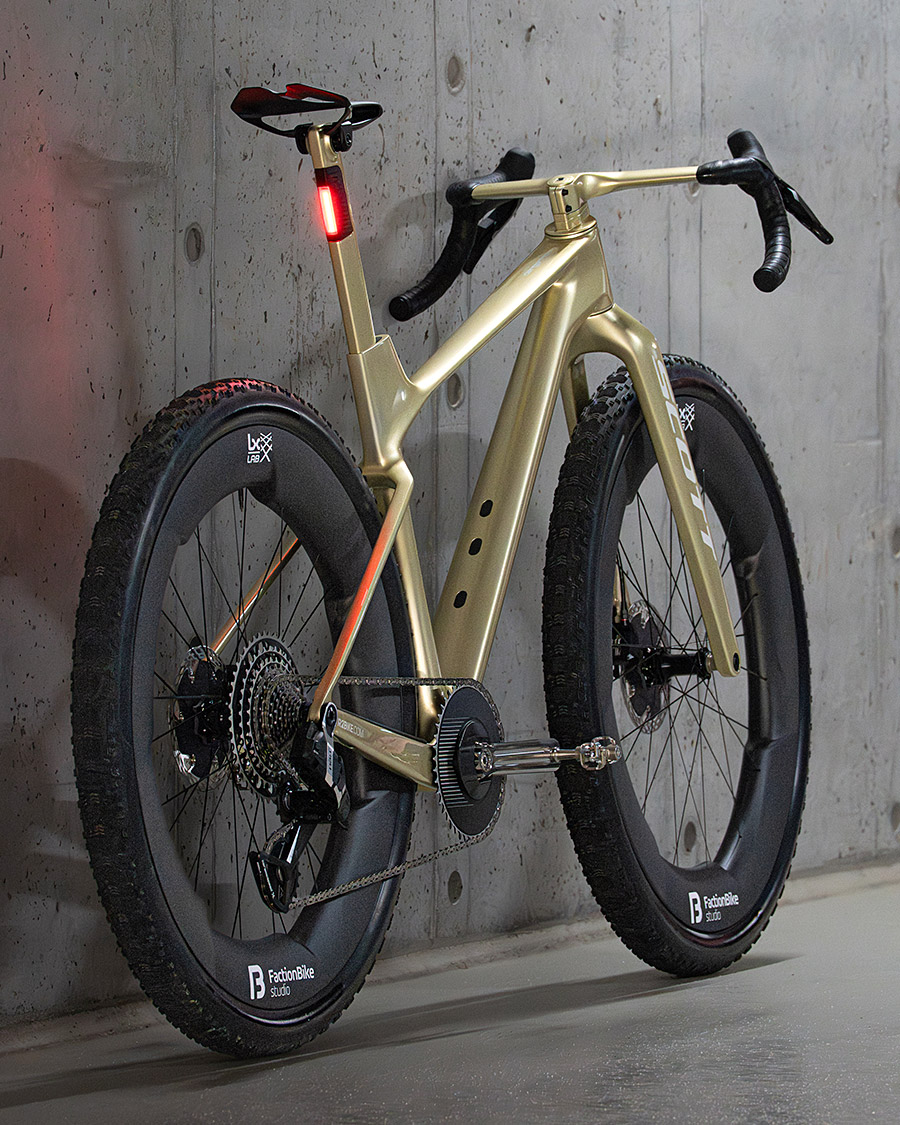
If you want to classify a mountain bike more precisely, there is a term for every style. From XC race bikes to freeriders or downhill bikes, you will find the right one. What is the current situation with gravel bikes? Drop bars, 45 mm wide tyres... is that it? If you take a look at the SCOTT portfolio, the first thing you'll notice is the Addict Gravel. It's the ‘standard gravel bike’, so to speak. It's an excellent all-rounder, fast, efficient and a lot of fun. Then there's the Scale Gravel. An MTB platform with flat handlebars and a rigid fork. Enormous tyre clearance and a geometry that gives you confidence and control on any terrain. So far, so good – but Dangerholm wouldn't be Dangerholm if he didn't combine these two concepts and then add a pinch of aero road bike DNA on top. And so the idea for this SCOTT Scale RC Aero concept was born. The result is a unique custom bike that combines the seating position and efficiency of the Addict Gravel with the performance of the Scale Gravel on rough terrain – plus aero from the road bike world.
Bike Presentation

Frameset
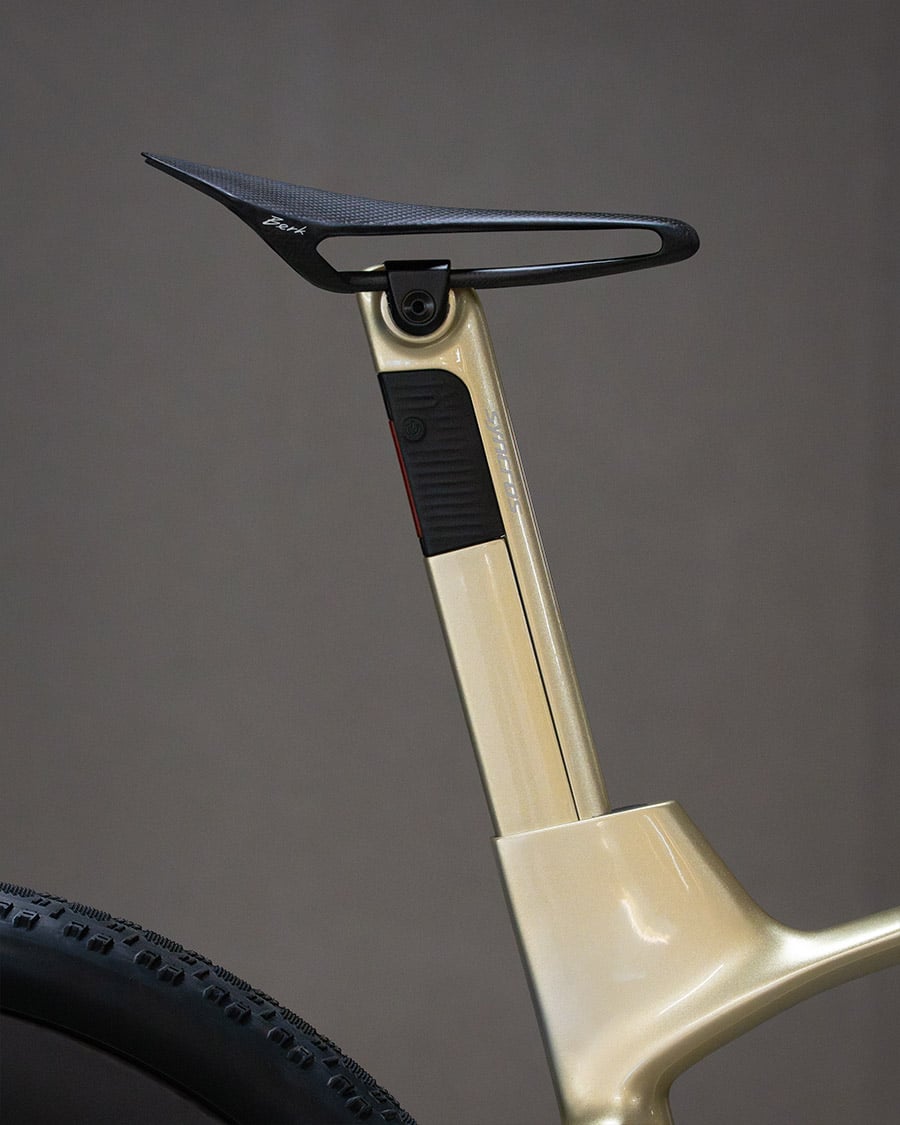
The core is a SCOTT Scale Gravel frame, which has undergone ‘a few’ modifications. The area around the seat post has been taken from a SCOTT Foil RC. Dangerholm asked SCOTT if there was a Foil RC somewhere that had been in an accident and was no longer in use. He was in luck – there was indeed a frame available. In the next step, Dangerholm cut up the Scale frame, removing a large part of the upper seat tube area. The same piece of the Foil was then put in its place. This wasn't everyday work for Dangerholm, and he hoped that his plan would work out. But as a wise man once said, ‘In 60% of cases, it works every time.’ Once he had two perfectly fitting, straight shapes, he took the pieces to his carbon repair expert, who fixed everything and wrapped it in plenty of new carbon fibre fabric. Due to the integrated seat post clamp, which gives the original Foil part a P-shape, Dangerholm also added a piece of carbon tube at the very front of this new construction to give it a nice wedge-shaped aero shape. But that's not all! The drive side of the chainstay was also heavily modified to allow the use of larger chainrings. The Scale does not offer space for large gear ratios as standard – after the tuning measure, there was space for chainrings up to 46 teeth. After all the renovation work, Dangerholm once again invested a considerable amount of time in sanding and finishing work to ensure that he had the best possible basis for the painting process.
Components
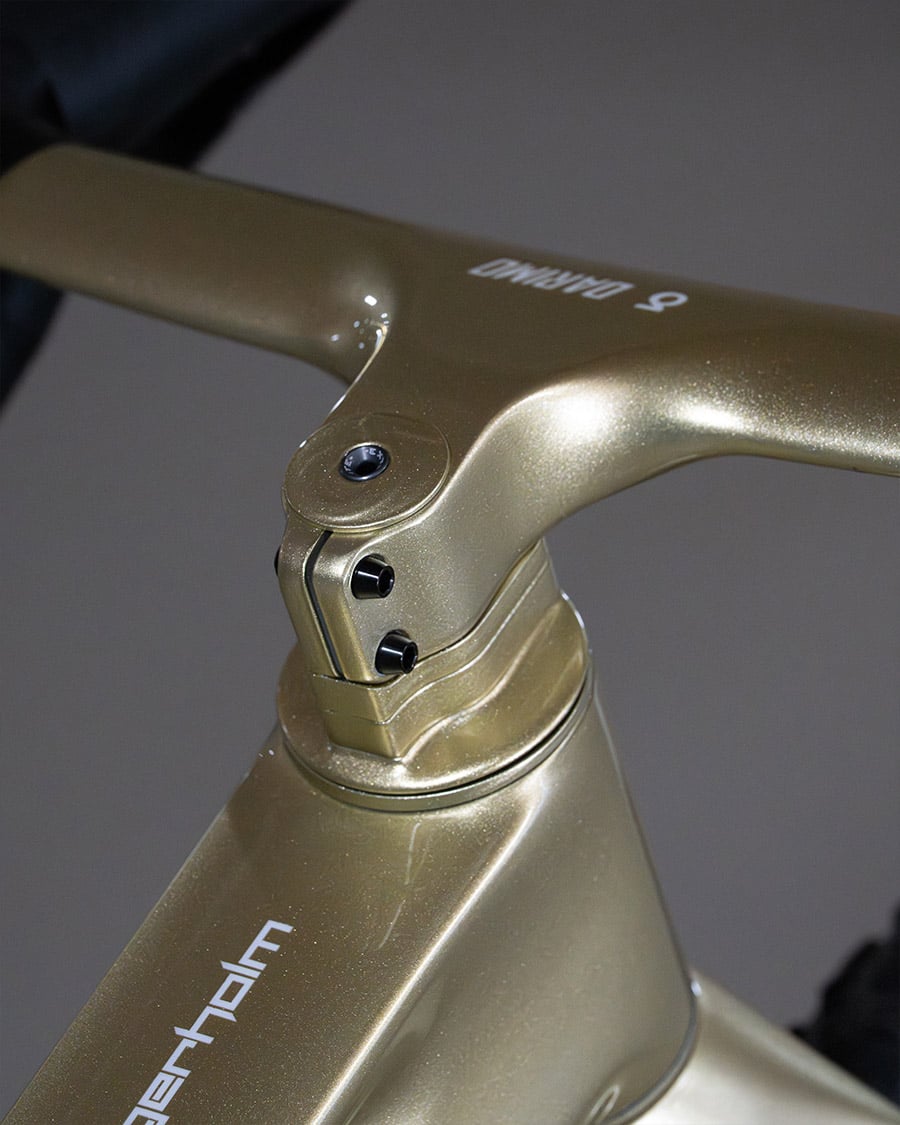
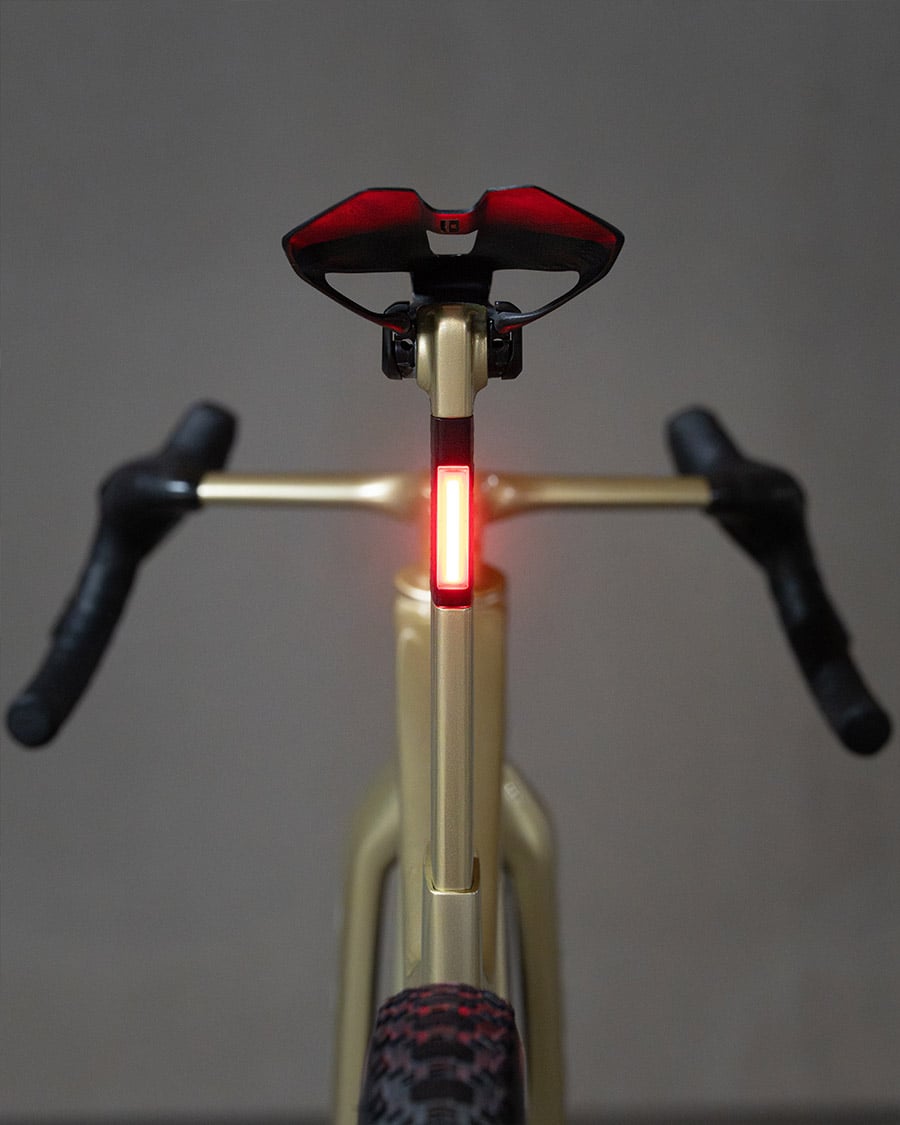
The Syncros Duncan SL Aero CFT seatpost is used, which also fits in a Foil RC as standard. Of course, the question arises as to whether the aerodynamic advantages gained from the seatpost are negated by the 2.25" MTB tyres used, but marginal gains are still gains, and last but not least, there are also visual reasons for using this seatpost. The best thing about it, however, is that a perfectly integrated rear light is available for the seat post, the Syncros Campbell 20 Aero iL, which gives the whole thing a touch of Formula 1. The Berk Lupina Monocoque saddle fits perfectly with the seat post and improves both comfort and the futuristic aero design. As the name suggests, it is made from a single piece of carbon fibre and weighs only 99 g. The handlebar unit is a Darimo Nexum Drag Gravel Cockpit with 80 x 380 mm and a stem angle of -12 degrees. This size was specially developed for two of Dangerholm's MTB/gravel projects, as the longer frame (compared to a conventional gravel bike) requires a shorter stem. Due to the flatter steering angle – compared to road bikes – a -6 degree cockpit is also not practical. At high speeds, it would otherwise automatically lift the front wheel. This led to the implementation of -12 degrees. The headset wedge, cover and spacers were also custom-made to ensure that the handlebars fit well into the frame while allowing for internal cable routing in the front area. With a height of 183 cm, Dangerholm normally rides a size L, but here he opted for a size M to shorten the reach and balance out the drop bar configuration. Overall, Dangerholm has almost exactly the same riding position on this bike as on his size L SCOTT Addict Gravel.
Brakes
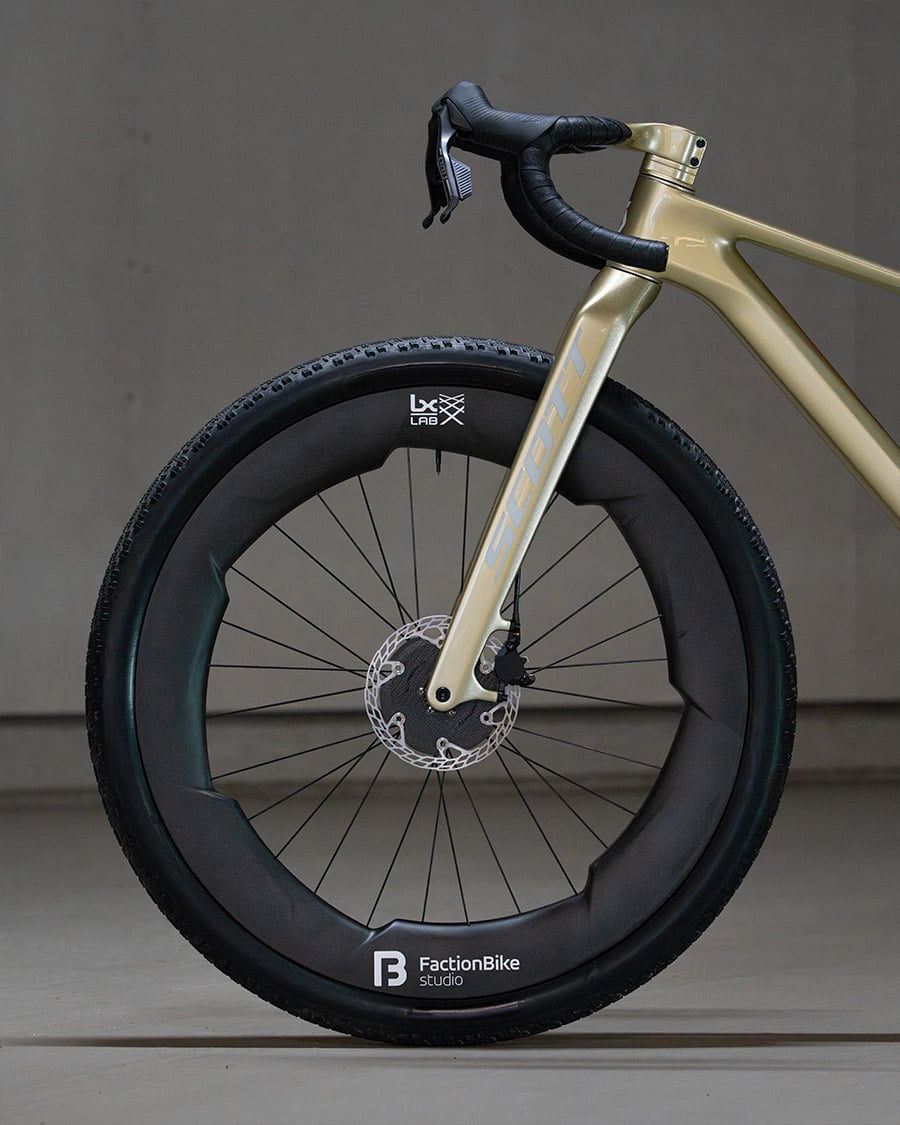
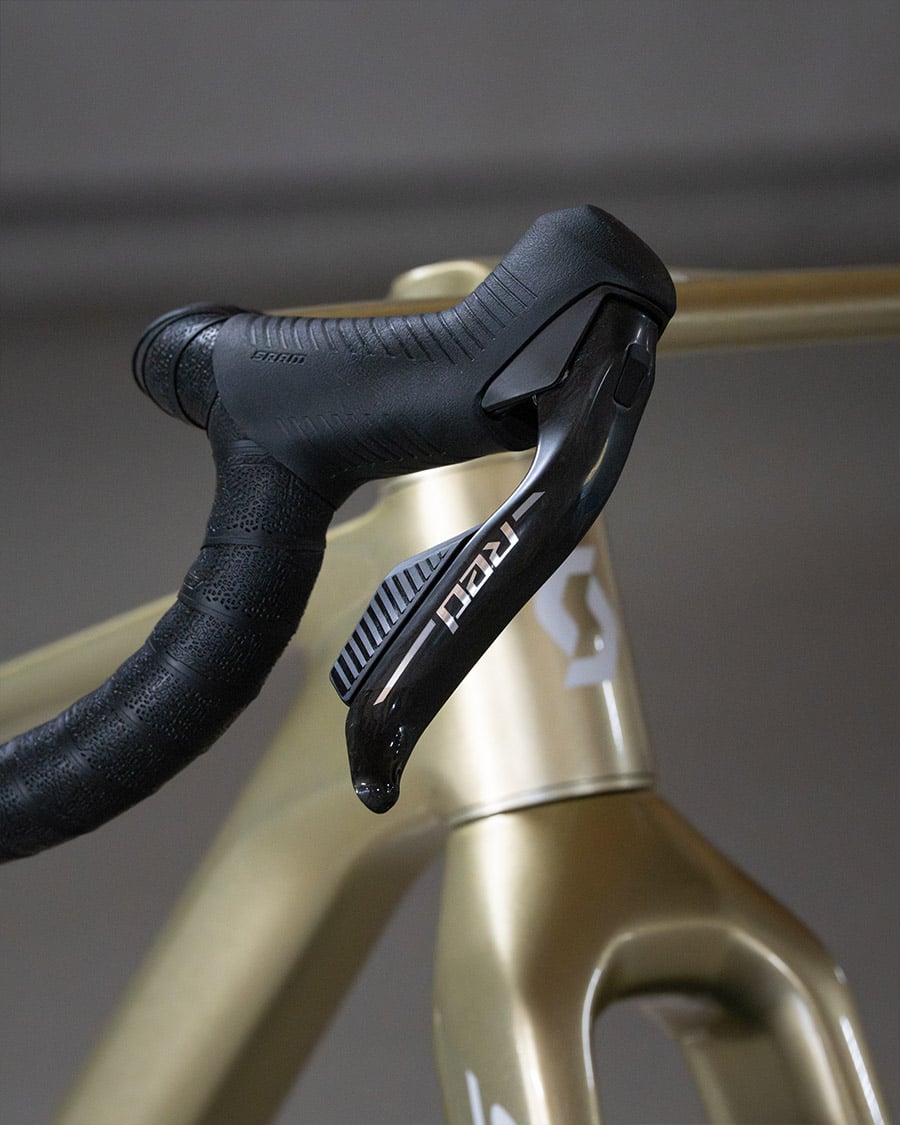
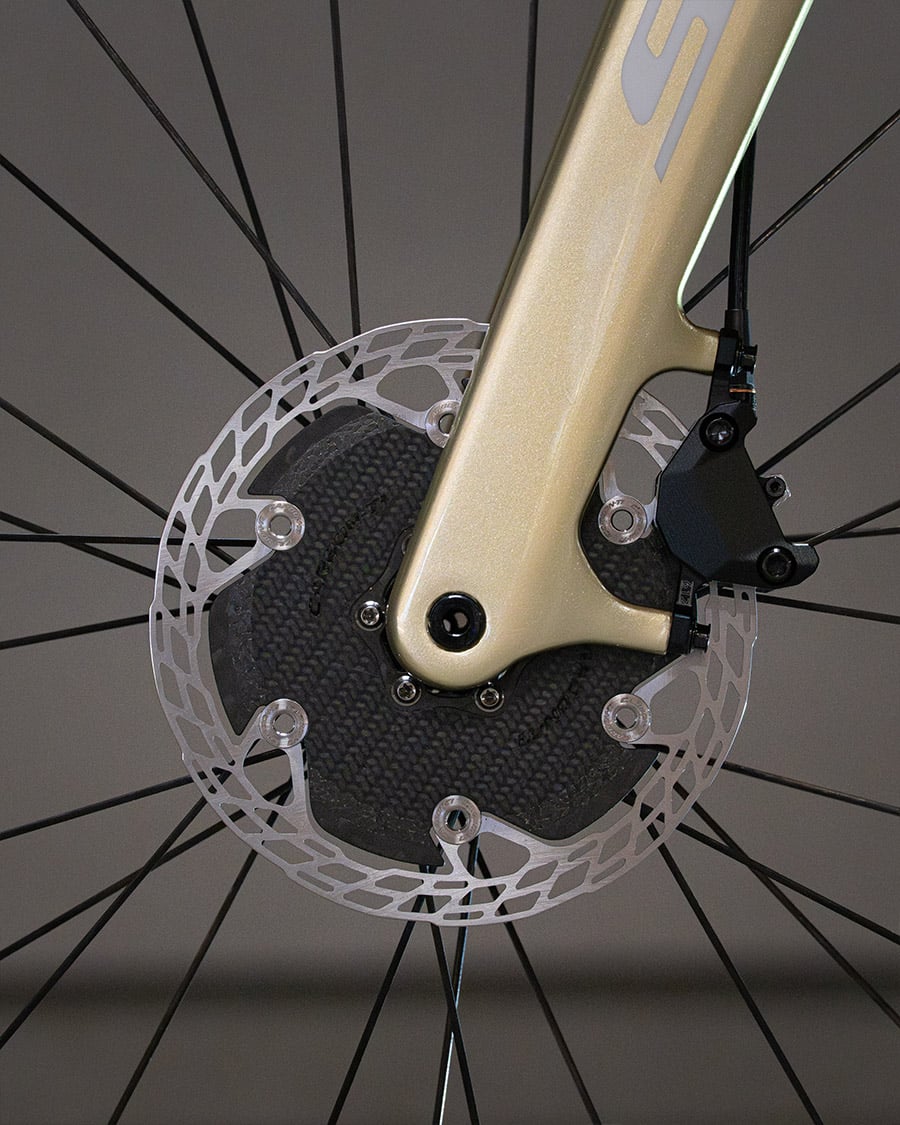
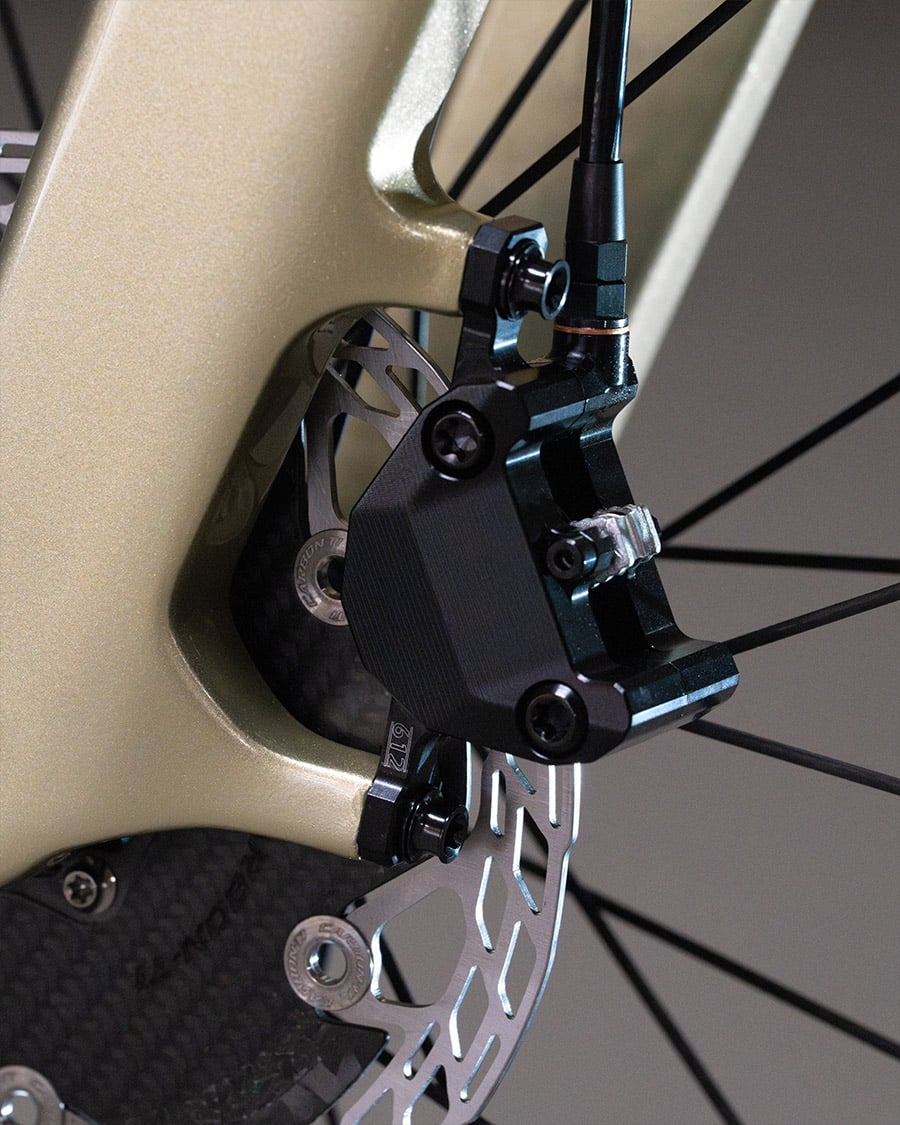
The choice of SRAM RED E1 brake levers was an easy one, as they offer fantastic ergonomics and excellent braking power. Dangerholm also appreciates the use of the bonus buttons to operate the Hammerhead Karoo without having to take his hands off the hoods. The brake calipers are 2-piston versions from 612 Parts. The brand is based in Switzerland, but the brake calipers are manufactured in Germany and offer a truly unique stealth design. A setup with 180 mm discs and adapters would have been no problem, but for Dangerholm, the aero aspect was paramount, so 160 mm discs were fitted to the bike. The Carbon-Ti X-Rotor Aero brake discs not only look unusual, they also offer aerodynamic advantages. The discs are also lightweight and offer impressive heat dissipation.
Drivetrain
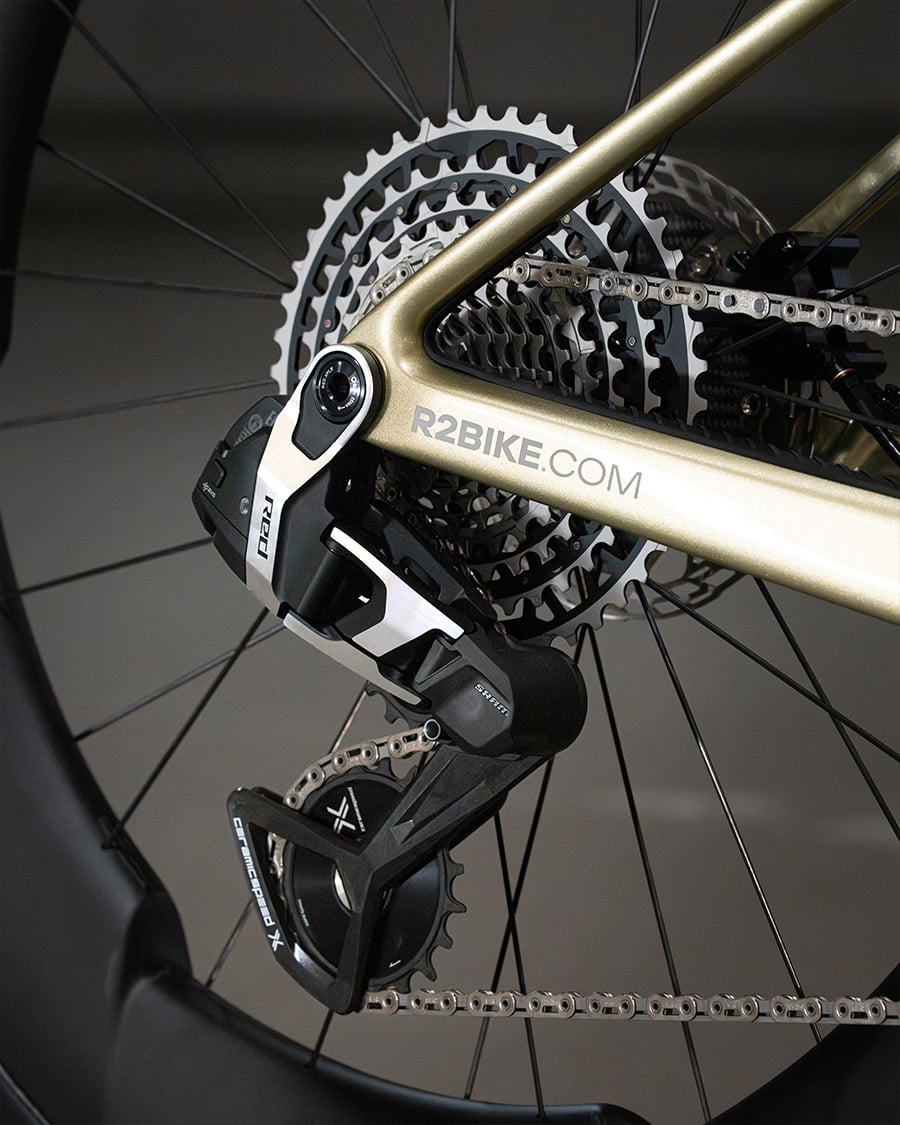
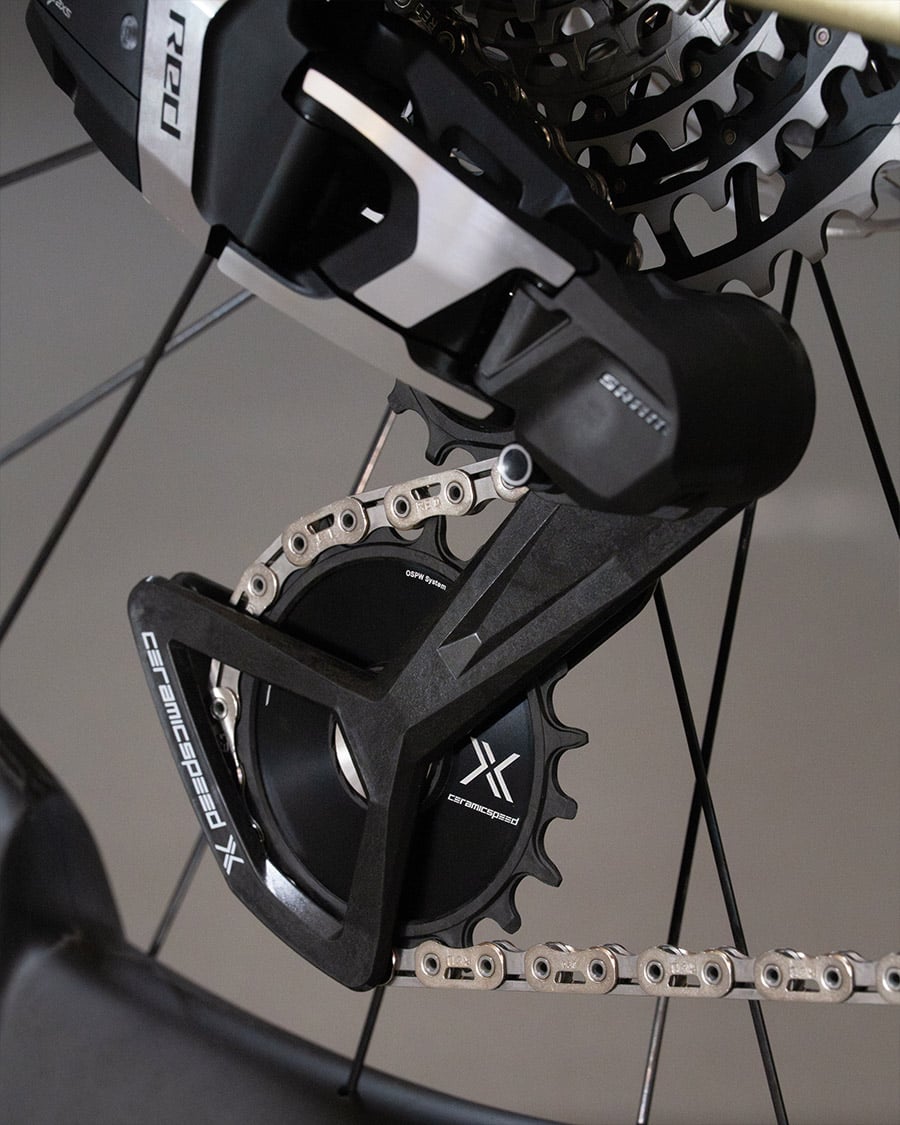
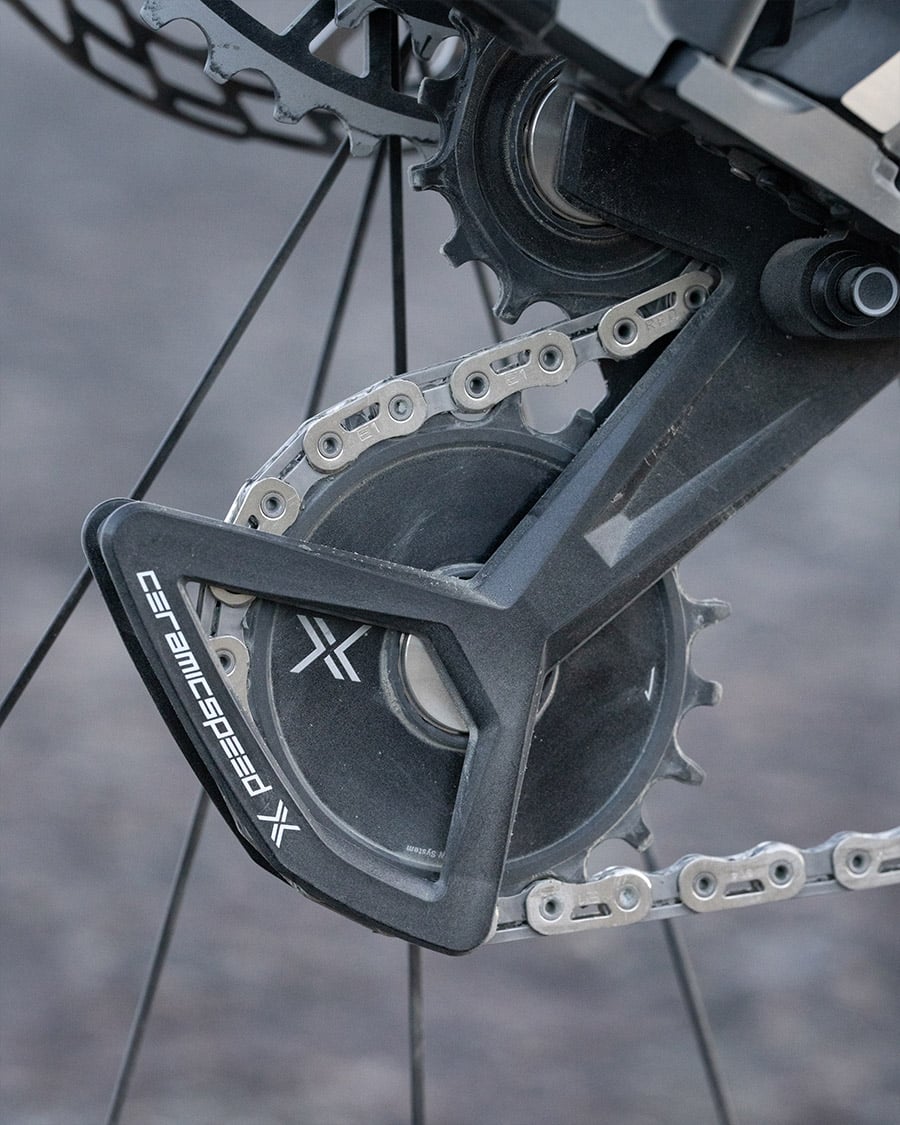
Dangerholm isn't experimenting in this area: the SRAM RED XPLR rear derailleur, cassette and chain are set. The rear derailleur has been fitted with an OSPW X ALPHA cage from CeramicSpeed. In addition to outstanding performance, the rollers are easy to maintain! For the crankset, Dangerholm opted for a titanium crankset from WERT Cycling this time. The crank arms are hollow, which reduces the weight of the crank to an incredible 314g. However, this is still a pre-production model with a wider axle, which allows the use of a 6.5mm offset SRAM RED Aero chainring with 44 teeth. The Q-factor remains narrow and aerodynamic, though. All of this revolves around a CeramicSpeed BB ALPHA bearing – here too, sealing, durability and low maintenance are a no-brainer. Dangerholm doesn't cut any corners when it comes to pedals either, using the Xpedo M-Force 8 Ti.
Wheelset
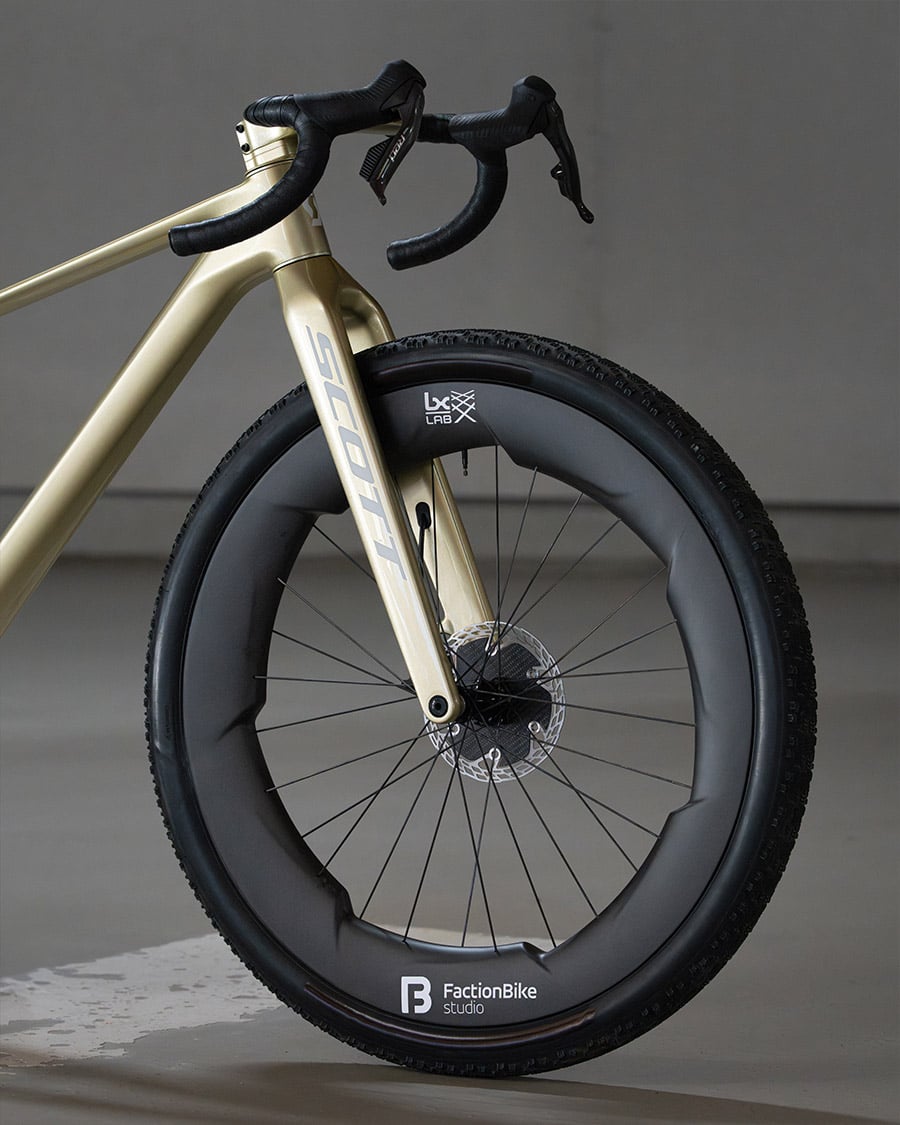
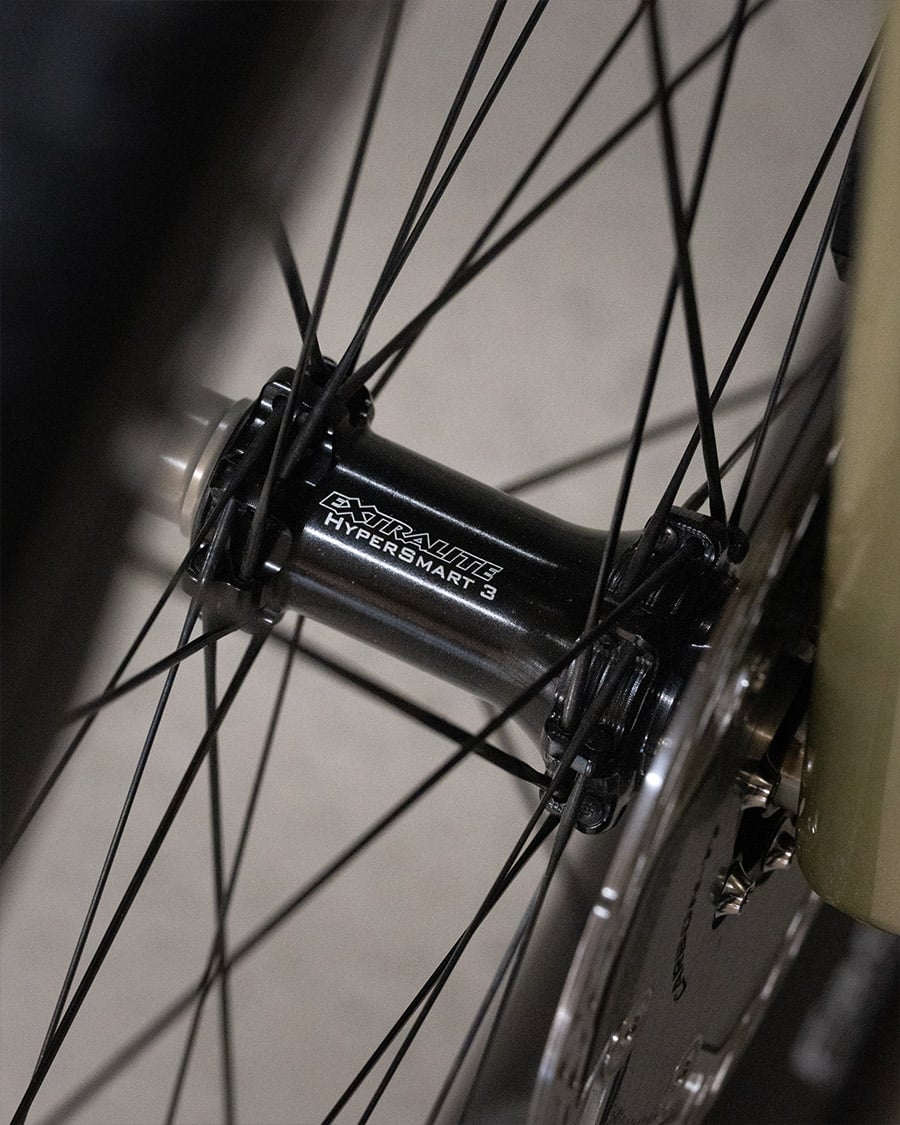
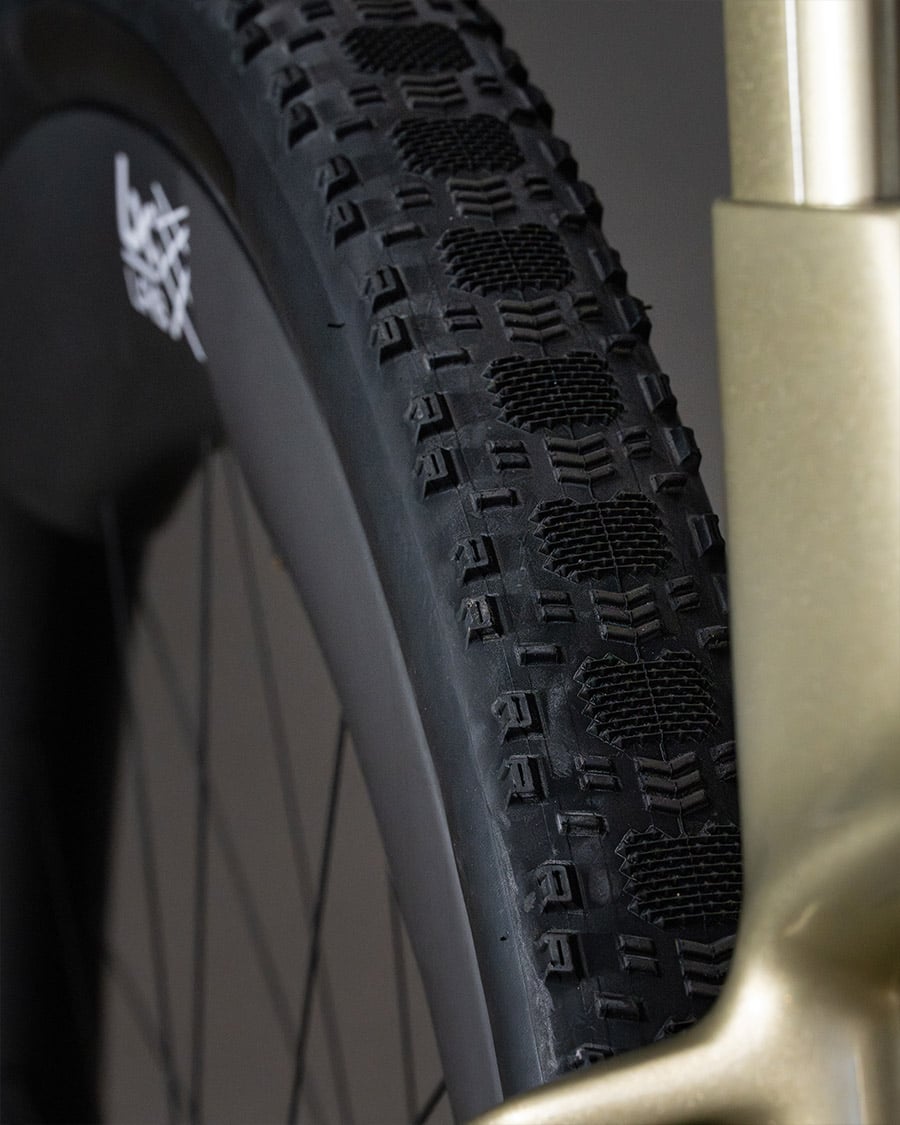
The wheels are now going all out. Anyone who has seen these prototypes in person will be impressed. Inspired by Zipp's 303 XPLR SW, but with a clear step up in width: the rims have an inner width of 45 mm, an outer width of 52 mm and a depth of 70 mm. These values harmonise with 2.25" tyres and also achieve strong aerodynamic values. The high volume allows for lower air pressure without the tyres flexing too much when cornering or accelerating. The low air pressure makes the whole system faster off-road and reduces rolling resistance. As mentioned, the Aero will not be faster than a normal gravel bike with 45 mm tyres on good gravel roads – the Aero excels on rougher terrain and delivers top speeds where a normal gravel bike would struggle. As there were no tyres specifically designed for this super-wide design, Dangerholm initially had some concerns, for example that the overall profile might become too angular and that the shoulder treads would not end in a position favourable for cornering grip. On closer inspection, however, he realised that you very rarely get into such extreme lean angles when gravel riding. On a road bike, you have enough grip to lean very far, but on gravel, you start to skid much earlier, so a very round tyre profile is not really necessary. The prototype rims were developed in collaboration with Faction Bike Studio and LX Lab, both based in Canada. Faction Bike Studio is a design and engineering firm that typically works for other bicycle and component brands, while LX Lab offers carbon prototypes among many other services. The tyres are Maxxis Aspen ST MaxxSpeed Team Spec in 2.25-inch width. Although the Aspen can be ridden tubeless, Dangerholm usually rides them with super-light REVOLOOP REVO.ULTRA MTB, which are extremely light TPU tubes. As the rims are prototypes and there are no production plans, no emphasis was placed on extremely low weight at this stage, so they turned out to be quite heavy, to say the least. However, to compensate for this somewhat, they were equipped with Alpina Hyperlite Aero spokes and Extralite HyperSmart 3 hubs, which are among the lightest hubs in the world. But it wasn't just weight that was decisive in choosing the Extralite hubs; they also have some very special features. Thanks to a Boost adapter kit, they can be converted between a gravel bike hub spacing of 100/142 mm and a Boost mountain bike hub spacing. This allows Dangerholm to use these wheels on other bikes for testing if necessary. In addition, these hubs are available with an XDR freehub, which is required for the 13-speed SRAM RED XPLR cassette.
SCOTT Scale RC Aero
| Frameset | SCOTT Scale RC Gravel | |
| Fork | SCOTT Scale Rigid | |
| Expander | Carbon-Ti X-Plug | |
| Dropbar | Darimo Nexum Drag, 80x380 mm, -12° | |
| Headset | Syncros | |
| Bartape | Syncros RC | |
| Shifter | SRAM RED | |
| Brakes | 612 Parts | |
| Brakediscs | Carbon-Ti X-Rotor Aero 160mm | |
| Seatpost | Syncros Duncan SL Aero CFT | |
| Saddle | Berk Lupina Monocoque | |
| Crank | WERT STW-M 170mm | |
| Chainring | SRAM RED Aero Power Meter 44T | |
| Bottom Bracket | CeramicSpeed BB ALPHA | |
| Chain | SRAM RED | |
| Cassette | SRAM RED XPLR | |
| Rear Derailleur | SRAM RED XPLR | |
| Rear Derailleur Cage | CeramicSpeed OSPW X ALPHA | |
| Pedals | Xpedo M-Force 8 Ti | |
| Rims | Dangerholm - Faction Bike Studio - LX Lab Prototype Rims | |
| Tires | Maxxis Aspen ST MaxxSpeed Team Spec 29x2.25” | |
| Spokes | Alpina Hyperlite Aero | |
| Hubs | Extralite HyperSmart 3 | |
| Tubes | REVOLOOP REVO.ULTRA MTB | |
| Weight | 9,00 kg |