












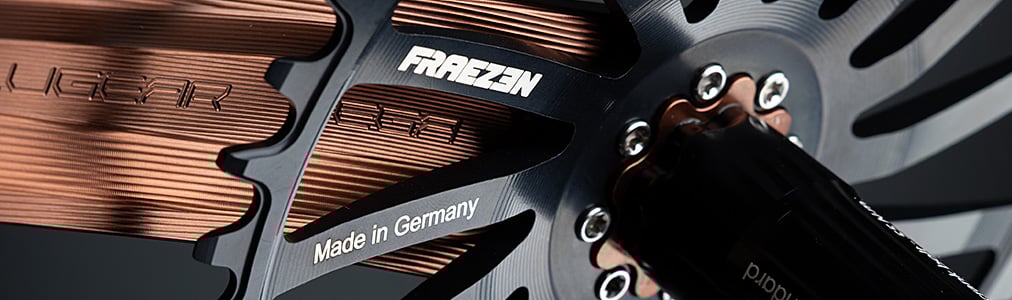
Direct Mount Chainrings Installation – Precise Performance for Modern Drivetrains
What Are Direct Mount Chainrings?
Direct mount chainrings are mounted directly onto the crank – without the traditional spider as an intermediary. This innovative mounting method offers decisive advantages compared to classic spider mounting: lower weight, increased stiffness, and more precise power transfer. At R2BIKE, you’ll find high-quality direct mount chainrings for all common drivetrain systems.
want read more.
Direct Mount vs. Spider Mounting – The Key Differences
Spider Mounting (Traditional)
- The chainring is mounted to the crank via a spider (star), usually with 4 or 5 arms
- Universal compatibility thanks to standardized bolt circles (BCD)
- Easy swapping between different tooth counts
- Higher overall weight due to the additional component
Direct Mount (Modern)
- Mounting without a spider – the chainring is attached directly to the crank
- Manufacturer-specific standards and mounting patterns
- Optimal power transfer thanks to a stiffer connection
- Reduced weight and more compact design
- More precise chain guidance
Direct Mount for 1x and 2x Drivetrains
1x (Single) Direct Mount Chainrings
1x direct mount chainrings are specifically developed for modern single chainring drivetrains. They offer:
- Optimized tooth profiles for better chain retention
- Narrow-wide tooth profile prevents chain drop
- Wider tooth range (typically 28-42 teeth for MTB, up to 50+ for gravel/road)
- Often compatible with integrated chain guides or retainers
- Special coatings for increased durability
2x Direct Mount Chainrings
For 2x drivetrains, direct mount chainrings are used as the outer ring:
- Combined either with a conventional inner chainring or as a one-piece construction
- Optimized shifting thanks to precise positioning
- Matched tooth profiles for smooth shifting
Manufacturer Standards: SRAM vs. Shimano Direct Mount
SRAM Direct Mount Standard
- SRAM established its own direct mount standards early on:
- 3-bolt direct mount: Three mounting bolts in a specific pattern
- 8-bolt direct mount: newer standard on SRAM, common for powermeter crank mounting
Shimano Direct Mount Standard
- Shimano developed their own direct mount solutions:
- Shimano Direct Mount: Compatible with current XT, XTR, SLX, and Deore Hollowtech II cranks
- Hyperglide+ technology for optimized shifting
- Special chainring profiles for 11- and 12-speed cassettes
Other Standards
- RaceFace Cinch: Spline system for tool-free mounting
- e*thirteen Direct Mount: Proprietary 3-bolt system
- Absolute Black: Universal solutions for various cranks
Oval vs. Round Chainrings
Round Chainrings (Standard)
- Consistent power transfer throughout the pedal stroke
- Proven technology with universal compatibility
- Ideal for steady cadence and endurance rides
- Easier maintenance and longer drivetrain life
Oval Chainrings (Elliptical)
- Oval direct mount chainrings provide biomechanical advantages:
- Optimized power utilization: greater radius at the strongest pedaling position
- Improved efficiency: Up to 5% better power output possible
- Reduced strain: Relief in the weakest pedal position
- Better traction: More consistent power delivery, especially when climbing
Timing and orientation: Oval chainrings must be aligned correctly – the largest radius should be at the 3 o’clock position (optimal power phase).
Chainring Offset – The Correct Chainline for Every Standard
The chainline is crucial for optimal shifting performance and minimal wear. Depending on frame and wheelset standards, direct mount chainrings require different offsets for correct chain positioning.
Non-Boost Standard (142mm/100mm)
- Bottom bracket width: Standard 68/70mm BSA or 92mm BB92
- Rear spacing: 142mm OLD
- Chainline: Typically 49-50mm from frame centerline
- Chainring offset: 0-3mm depending on crank design
- Applications: Older MTBs, most road and gravel bikes
Boost Standard (148mm/110mm)
- The Boost standard moves both front and rear wheels outward for stiffer wheels:
- Bottom bracket width: Still usually 68/70mm, sometimes 73mm
- Rear spacing: 148mm (+6mm over non-Boost)
- Front: 110mm (+10mm over non-Boost)
- Chainline: 52-53mm from frame centerline
- Chainring offset: 3-6mm additional offset required
- Advantages: Stiffer wheels, more tire clearance, better chainline for wide cassettes
- Applications: Modern MTBs, E-MTBs, plus bikes
Super Boost Standard (157mm)
- Super Boost extends the Boost standard even further for extreme applications:
- Rear spacing: 157mm (+9mm over Boost)
- Chainline: 56-57mm from frame centerline
- Chainring offset: 6-10mm additional offset
- Special cranks: Often with longer crank arms or modified bottom brackets
- Applications: E-MTBs with wide tires, fat bikes, specific downhill bikes
- Advantages: Maximum stiffness, space for very wide tires (up to 3"+)
Offset Calculation and Compatibility
Key factors:
- Cassette width: 11-speed, 12-speed, and even 13-speed cassettes influence the optimal chainline
- Crank arm design: Different cranks have various Q-factors
- Frame geometry: Chainstay length impacts chainline requirements
Practical consequences:
- Wrong offset: Poor shifting, increased wear
- Too little offset: Chain runs too far inwards, poor cassette response
- Too much offset: Chain runs too far outwards, poor chainline angle
Measuring the chainline:
- Measure the distance from the frame centerline to the chainring
- Compare with the center of the cassette (on the middle cog)
- Ideal chainline: Chainring and cassette center are on the same line
Manufacturer-Specific Offset Solutions
- SRAM Direct Mount:
- Standard offset for non-Boost: 0mm
- Boost offset: +3mm due to special chainring design
- Shimano Direct Mount:
- Integrated Boost offset in modern cranks
- HollowTech II cranks with adjusted geometry
- Special Super Boost variants available
- Aftermarket solutions:
- Wolf Tooth: Offers various offset variants
- Absolute Black: Oval chainrings with standard and Boost offset
- RaceFace: Cinch system with interchangeable offset spacers
Buying Guide: How to Find the Right Direct Mount Chainring
Check Compatibility
- Identify crank standard: SRAM, Shimano, or other manufacturer
- Determine mounting pattern: 3-bolt, 8-bolt, spline system, or others
- Bottom bracket standard: BSA, BB30, PF30, BB92, etc.
- Observe chainline: Boost vs. non-Boost standards
Choose Tooth Count
- Consider terrain: More teeth for speed, fewer for climbing
- Match cassette ratio: Optimize the overall gear range
- Adapt to riding style: XC, trail, enduro, or e-bike
Quality Features
- Precision CNC manufacturing for optimal chain guidance
- Hardened materials for long lifespan
- Brand compatibility for perfect function
- Weight optimization without sacrificing stability