












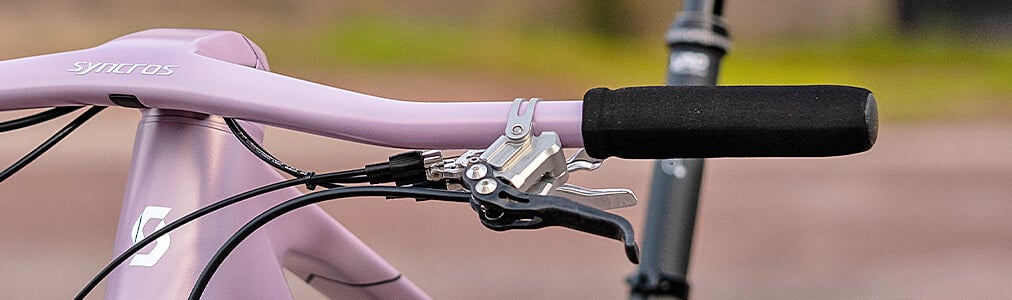
MTB Handlebar Grips: For the Perfect Grip
Handlebar grips are much more than a simple accessory – they are one of the most
important contact points between you and your bike. The right grips can significantly
improve your riding experience, reduce fatigue, and provide more control on the trails.
Here you'll learn everything about the different types of MTB grips, their characteristics,
and how to find the perfect grip for your needs.
want read more.
Grip Types Overview: From Lock-On to Screw-On
Lock-On Grips
Lock-On grips have revolutionized the MTB world and are now the standard for demanding bikers. The principle is simple: A rubber body is attached to a plastic or aluminum sleeve and securely fixed to the handlebar with clamp rings at the ends.
Advantages:
- Absolutely slip-proof, even in wet and extreme conditions
- Simple and quick installation/removal
- Precise power transmission through firm fit
- Durable and low maintenance
Disadvantages:
- Slightly higher weight due to the clamp rings and sleeve
- Tend to provide less damping than classic rubber grips
- Higher price compared to standard grips
Push-On Grips (Classic Plug-In Grips)
The traditional version without mechanical clamping is still popular, especially among bikepackers, weight enthusiasts, and purists.
Advantages:
- Minimal weight
- Maximum damping properties
- Often lower price
- Wide selection of materials, diameters, and hardness levels
Disadvantages:
- Can slip when wet
- More complex installation (hairspray, compressed air, or other aids needed)
- Shorter lifespan with frequent changes
Ergonomic Grips
Specially shaped grips with anatomical adaptation to hand position provide optimal pressure distribution and can prevent wrist problems.
Advantages:
- Relief for the wrists
- Improved comfort on long distances
- Often with additional palm rest
- Can prevent numbness and "biker's hand"
Disadvantages:
- Fixed hand position allows less variability when gripping
- Requires exact adjustment
- Takes getting used to for some riders
Material Properties: The Right Mix Makes the Difference
Special Materials
- Silicone: Extremely grippy when wet, but less durable
- Foam: Light and cushioning, ideal for longer tours
- Rubber-gel combinations: Offer superior damping properties
Grip Patterns and Texture: Hold Under All Conditions
The profile of the surface significantly influences the grip and the riding feel:
- Diamond pattern: The classic for good all-round grip
- Honeycomb structure: Excellent distribution of hand pressure
- Longitudinal profile: Good control in wet conditions as water is drained
- Mushroom knobs: Maximum grip, especially in muddy conditions
- Smooth surface: Low weight and direct feedback, but less grip when wet
Grip Diameter: The Right Size for Your Hand
The diameter of a grip affects control, comfort, and fatigue:
- Thin grips (28-30mm): Ideal for small hands, precise control, lower weight
- Standard grips (30-32mm): Universally applicable for most hand sizes
- Thick grips (32-34mm+): Good for large hands, reduce fatigue on long tours
As a rule of thumb: When gripping the handlebar, your fingertips should reach to the first knuckle in your palm. If the grip is too thick, you lose control – if it's too thin, your hand tires faster.
Grip Length: Space for Brake Levers and More
The standard length of MTB grips is between 130-140mm, but there are variations:
- Short grips (100-120mm): For use with grip shift systems or when more space on the handlebar is needed
- Standard (130-140mm): Universally applicable
- Long (140mm+): For particularly large hands or more grip variations while riding
Note that the length should leave enough space for your brake levers, shift levers, and possibly dropper post remotes.
How to Find the Perfect Grip: 5 Steps to the Right Choice
1. Analyze your riding style and needs
- Enduro/Downhill: Prefer Lock-On grips with good grip and robust construction
- Cross-Country/Marathon: Lighter grips with good damping and efficient weight
- Tours/Trail: Ergonomic grips or those with good pressure distribution
- Bike park/Gravity: Thicker grips with maximum grip and durability
- Bikepacking/Long distance: Comfortable, cushioning grips that reduce fatigue
2. Consider your hand size
Measure your hand circumference (without thumb) at the widest point:
- Small hands (< 20cm): Thinner grips (28-30mm)
- Medium hands (20-22cm): Standard grips (30-32mm)
- Large hands (> 22cm): Thicker grips (32mm+)
3. Think about your gloves
The thickness of the glove affects the effective grip thickness:
- Without or with thin summer gloves: Standard to thinner grips
- With thick winter gloves: Choose rather thinner grips, as the gloves add bulk
4. Decide based on weather conditions
In which climate do you mainly ride?
- Dry conditions: You can choose from all grip types
- Humid/wet conditions: Prefer Lock-On grips with a grippy profile
- Mud/Extreme conditions: Choose grips with strong profiling and secure clamping
Installation Tips: How to Perfectly Install Your New Grips
Lock-On Grips:
- Thoroughly clean and degrease handlebar
- Loosen shift and brake levers and push aside
- Slide on grips and bring into the correct position
- Tighten clamp rings evenly and with the specified torque
- Reinstall shift and brake levers and align them ergonomically
Push-On Grips:
- Make the handlebar absolutely clean and dry
- Spray some hairspray or special grip mounting fluid on the handlebar
- Quickly slide on the grip (compressed air can help)
- Rotate to the correct position before the hairspray dries
Care and Maintenance: How to Make Your Grips Last Longer
- Regular cleaning with mild soapy water extends the lifespan
- Avoid aggressive cleaning agents that can attack the rubber
- Regularly check the tight fit of the clamp rings on Lock-On grips
- At the first signs of wear or damage, you should change the grips
Conclusion: The Right Grip Makes the Difference
The perfect grips not only improve your comfort but also increase your control and safety on the trail. Take the time to find the ideal grip for your individual requirements – the investment is worth it and pays off with every ride.
With the right combination of grip type, material, diameter, and profile, you'll get the maximum out of your rides – whether on technically demanding trails, long tours, or in the bike park. Discover our extensive range of bicycle grips for every purpose (MTB, trekking, city) now and find your perfect grip!