












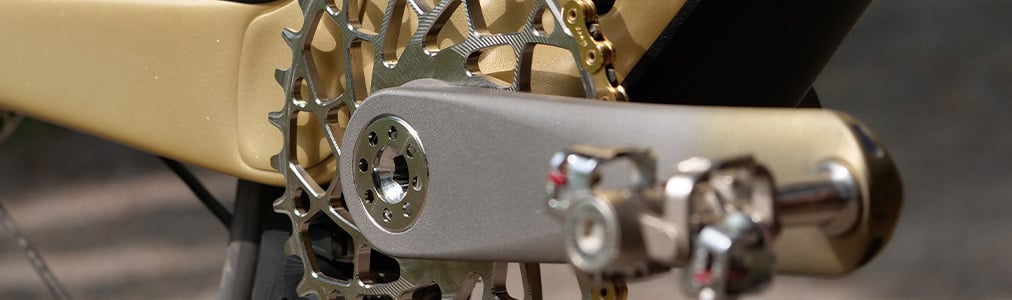
Mountain Bike Cranks – The Right Choice for Maximum Performance
The mountain bike crank plays a crucial role in efficiency, riding comfort, and performance on the trail. In our range, you’ll find high-quality MTB cranks for every application – from XC to downhill, from e-bikes to fat bikes.
want read more.
Compatibility: The Foundation for Choosing the Right Crank
Modern mountain bike cranks must meet a variety of demands. E-bike cranks are specifically designed for the increased torque forces of electric drives, while fat bike cranks take into account the unique geometry of wider tires. Classic MTB cranks provide proven performance for traditional mountain bike setups.
Standard Versions: Boost, Non-Boost, and Superboost+
The choice between Boost, non-Boost, and Superboost+ depends on your frame and the desired chainline. Boost standards offer improved stiffness and optimized chainlines, while non-Boost systems remain compatible with older frames. Wide cranks offer additional flexibility in chainring positioning.
Cannondale’s AI System: Special Challenges
Cannondale’s Asymmetric Integration (AI) uses an asymmetric bottom bracket geometry with an 83mm wide shell and a 30mm crank spindle diameter. However, the AI system is not compatible with standard cranks and requires specific Cannondale cranks or appropriate adapter solutions. Standard SRAM cranks are not compatible with AI frames, so Cannondale AI bike owners rely on manufacturer-specific components. Special caution is required when retrofitting power meters, as only a few manufacturers offer AI-compatible solutions. While the asymmetric alignment of the bottom bracket optimizes chainline and stiffness, it considerably limits the selection of available cranksets.
Materials: Focus on Weight, Stiffness, and Durability
Aluminum Cranks
Aluminum cranks offer the best price-performance ratio and impress with high stiffness at moderate weight. They require little maintenance, are corrosion-resistant, and are ideal for all-round use.
Carbon Cranks
Carbon cranks are the first choice for weight-conscious riders. The material stands out with excellent damping properties, reducing vibrations, and offers maximum stiffness at low weight for optimal power transmission.
Titanium Cranks
Titanium cranks combine the best of both worlds: light weight like carbon, but with the durability and reparability of metal. They are especially interesting for demanding riders who value sustainability.
Spindle Standards and Spider Systems
The choice of spindle standard must fit your bottom bracket precisely. Modern MTB cranks use various standards such as BSA, BB30, PF30, or BB92. The spider system determines the chainring mounting – from classic 5-arm spiders to modern direct-mount systems for optimal stiffness and easy chainring swaps.
Crank Arm Length: Ergonomics and Efficiency
Finding the Right Length (135–180mm)
Crank arm length directly affects your pedaling ergonomics and power output. Shorter cranks (135–165mm) are suitable for smaller riders and technical terrain, as they provide more ground clearance. Longer cranks (170–180mm) allow for higher torque but may be a hindrance in technical terrain.
General rules for crank arm length:
- Rider height under 170cm: 165–170mm cranks
- Rider height 170–185cm: 170–175mm cranks
- Rider height over 185cm: 175–180mm cranks
Power Meter Integration for Data-Based Training
Modern power meter cranks are revolutionizing mountain bike training through precise performance measurement. They enable objective training management, performance analysis, and progress monitoring. They are an indispensable tool, especially for ambitious riders and racing athletes.
What to Consider When Buying a Crank
Check Compatibility
- Determine the bottom bracket standard of the frame
- Pay attention to chainline and Boost standard
- Q-factor for optimal foot position
Define the Area of Use
- Trail riding: robust aluminum cranks
- XC racing: lightweight carbon versions
- Enduro/freeride: stiff, durable constructions
- E-bike: reinforced, e-bike-specific models
Future-proofing
- Modular spider systems for flexible chainring options
- Compatibility with current shifting standards
- Upgrade options for power meter integration
Conclusion: Finding the Perfect Mountain Bike Crank
Choosing the right MTB crank requires considering several factors: frame compatibility, application area, material preferences, and personal ergonomics. At R2BIKE, you’ll find the right solution for every need – from high-quality aluminum cranks to carbon cranks with power meter function.